
How to Pack Fragile Items for Interstate Moving: A Step-by-Step Guide
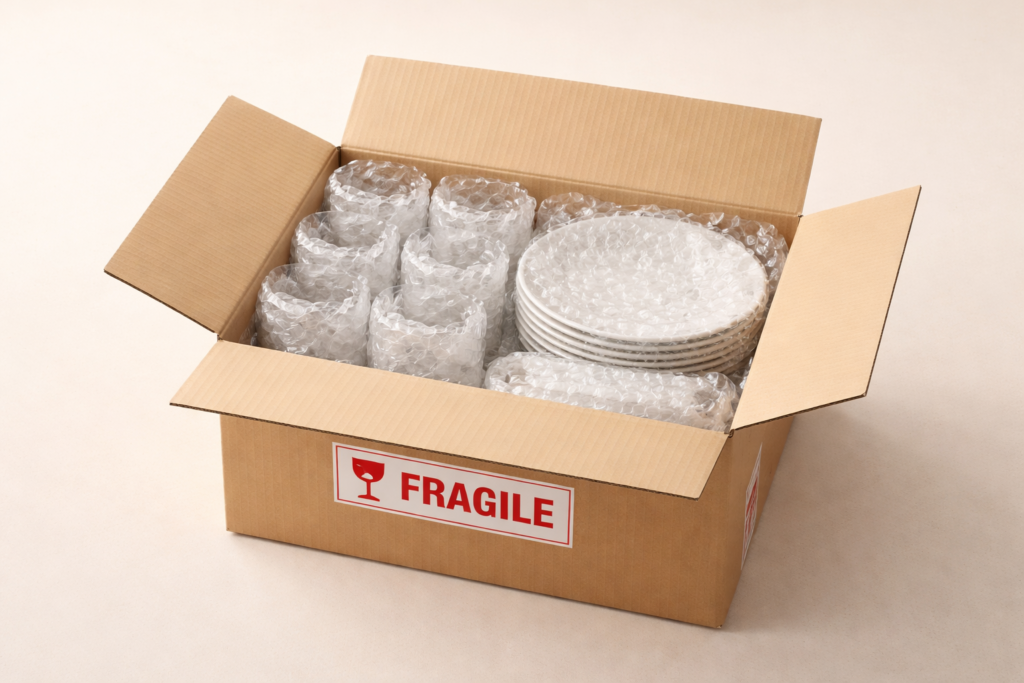
Moving interstate is exciting, but it is also the moment your most treasured possessions face the greatest risk. Cracked wine glasses, shattered picture frames, chipped ceramics: breakages during long-distance moves are far more common than they should be, and almost always preventable.
The difference between items that arrive safely and items that arrive in pieces usually comes down to one thing: how they were packed. Professional movers see the same avoidable mistakes on nearly every job — not enough cushioning, boxes that are too heavy, and fragile items mixed in with non-fragile ones.
This guide walks you through exactly how to pack fragile items for interstate moving, step by step, the way experienced removal professionals do it.
Step 1: Gather the Right Packing Materials
Before you pack a single item, make sure you have the correct materials. Using whatever boxes you have lying around is one of the most common causes of breakage on interstate moves.
What you will need:
- Double-walled cardboard boxes: Single-walled boxes compress too easily under the weight of other boxes in a truck.
- Bubble wrap: The primary protective layer for most fragile items.
- Packing paper (unprinted newsprint): Newsprint ink can transfer onto items; use clean packing paper instead.
- Foam pouches or foam sheets: Ideal for glassware, stemware, and delicate ceramics.
- Packing peanuts or crumpled paper: For filling void space inside boxes.
- Cardboard dividers: Essential for glasses and bottles — do not pack them without dividers.
- Strong packing tape (at least 2 inches wide): Thin tape fails under interstate road vibration.
- Permanent marker: For clearly labelling every box.
Pro tip from our experience: Invest in proper packing materials upfront. The cost of replacing broken items far exceeds the cost of quality bubble wrap and sturdy boxes.
Step 2: Sort and Audit Your Fragile Items
Not all fragile items are the same. Before you start wrapping, group your items into categories so you can pack similar things together and choose the right protection level for each.
| Item Category | Risk Level | Recommended Protection |
| Glassware & stemware | Very High | Foam pouches + cardboard dividers |
| Ceramics & crockery | High | Bubble wrap + packing paper |
| Mirrors & picture frames | Very High | Mirror boxes + corner protectors |
| Electronics | High | Original packaging (if available) or foam-lined boxes |
| Artwork & sculptures | High | Custom wrap + double-boxing |
| Lamps & shades | Medium–High | Lampshade boxes + tissue paper |
Step 3: Wrap Every Item Individually
This is the most critical step and the one most people rush. Every single fragile item needs its own wrap — even items that are part of a matching set.
For glasses and stemware:
- Stuff the inside of each glass with crumpled packing paper — this prevents implosion if the box is compressed.
- Place the glass on a sheet of bubble wrap and roll it diagonally, tucking in the ends.
- Secure with tape and place the wrapped glass vertically (rim up) into a divided box.
- Never lay glasses on their sides — the stems and rims are the most vulnerable points.
For plates and bowls:
- Wrap each plate individually in a sheet of packing paper, then add a layer of bubble wrap.
- Stack plates vertically — like records in a crate — never flat. Flat stacking concentrates weight on the lowest plate.
- Place a sheet of foam or packing paper between each plate even when wrapping individually.
- Limit each box to 5–6 plates maximum to control weight.
For mirrors, picture frames and artwork:
- Apply masking tape in an X pattern across the glass surface — if it cracks, the tape holds shards in place.
- Wrap the entire frame in bubble wrap, paying extra attention to corners.
- Use purpose-made mirror boxes (telescoping boxes that adjust to the exact size) rather than standard boxes.
- Label the box FRAGILE — DO NOT LAY FLAT on all four sides.
Step 4: Pack Boxes Correctly
How you load items into a box matters just as much as how you wrap them. Follow this layering system for every box containing fragile items:
- Layer 1 — Box floor cushion: Line the bottom of the box with 3–4 inches of crumpled packing paper or packing peanuts.
- Layer 2 — Heaviest items first: Place your heaviest wrapped items (e.g. plates, bowls) at the bottom.
- Layer 3 — Cushioning between items: Add packing paper between each item to prevent contact.
- Layer 4 — Lighter items on top: Place lighter, more delicate items (e.g. glasses, figurines) in the upper half of the box.
- Layer 5 — Top cushion: Fill the remaining space with packing peanuts or crumpled paper until there is zero movement when you shake the box.
- Layer 6 — Seal and tape: Close the box and run tape along the seam and down both sides in an H-pattern. Never use a single strip of tape.
The shake test: After sealing every box, pick it up and shake it gently. If you hear or feel any movement, open the box and add more cushioning. This single test prevents the majority of breakages.
Step 5: Label Every Box Clearly
Clear labelling is your last line of defence against breakage. Movers and freight teams handle hundreds of boxes — clear instructions prevent mishandling.
- Write FRAGILE in large letters on at least three sides of the box (top and two sides).
- Add THIS SIDE UP with an arrow on all four sides.
- List the contents briefly (e.g. “Wine glasses x 6” or “Dinner plates”) to help with unpacking priority.
- Note the destination room (e.g. “Kitchen — fragile”) so the box goes straight to the right place.
- Use a coloured sticker system: red stickers for fragile boxes make them immediately identifiable.
Step 6: Load Fragile Boxes Last, Unload First
Packing is only half the battle — how boxes are positioned in the moving truck determines whether they arrive intact.
- Fragile boxes should always be loaded last so they sit at the top of the truck, not buried under heavy items.
- Keep fragile boxes away from the truck walls, which vibrate the most in transit.
- Do not stack anything heavy on top of fragile boxes.
- Ask your interstate mover to wedge fragile boxes between soft items (sofas, mattresses) to absorb vibration.
- If driving yourself, place fragile boxes on the seat next to you or behind the front seat where movement is minimal.
Step 7: Consider Professional Packing for High-Value Items
Some items are simply too valuable or too complex to pack yourself. If any of the following apply, consider having your interstate mover professionally pack these specific items:
- Antiques or collectibles with significant monetary or sentimental value
- Large or unusually shaped sculptures and artworks
- Grand or upright pianos
- High-end audio-visual or home theatre equipment
- Items that require insurance coverage — insurers will sometimes only honour claims for professionally packed goods
At Glitterz Logistics, our professional packing service covers all fragile and high-value items with industry-grade materials and full in-transit insurance. Ask us about adding a packing service to your interstate move booking.
Fragile Packing Mistakes to Avoid
Even experienced movers make these errors. Keep this list visible while you pack:
| Common Mistake | What to Do Instead |
| Using newspaper instead of packing paper | Ink transfers and stains. Use clean unprinted newsprint. |
| Packing boxes too heavy | Keep fragile boxes under 15 kg. Heavier boxes get dropped. |
| Leaving empty space in boxes | Void space allows items to shift and collide. Always fill gaps. |
| Wrapping items together in one bundle | Wrapping two items together means they can knock against each other. Wrap individually. |
| Skipping the tape on box seams | Unsealed seams fail under load. Always tape seams and reinforce the base. |
| Forgetting to label ‘This Side Up’ | Boxes get flipped in transit if there is no directional instruction. |
Frequently Asked Questions
What is the best material for wrapping fragile items?
Bubble wrap is the most versatile, but foam pouches offer superior protection for glassware and stemware. Always back up bubble wrap with a layer of packing paper to prevent condensation from the bubble wrap surface.
Can I use clothing instead of packing paper?
Soft clothing like t-shirts and towels can work as a supplementary cushion (e.g. filling void space) but should never replace dedicated packing materials for the primary wrap. Clothing can shift and compress, leaving items unprotected.
How do I pack a TV for interstate moving?
Ideally, use the original box and foam inserts. If you no longer have these, buy a purpose-made TV box from a removal supply store. Wrap the screen in anti-static bubble wrap and secure foam corner protectors before boxing.
Should I insure my fragile items for an interstate move?
Yes, always. Reputable interstate movers offer in-transit insurance options. Check whether the policy covers professionally packed and self-packed goods separately, as some policies distinguish between the two.
How far in advance should I start packing fragile items?
Begin packing fragile, rarely used items (e.g. decorative items, fine china) at least 2–3 weeks before your move date. Leave everyday fragile items (glasses, plates you use daily) to the final 2–3 days.
Ready to Move Interstate?
Glitterz Logistics provides professional interstate moving and freight services across Australia, with optional full-packing services, fragile item specialists, and in-transit insurance for total peace of mind.
Visit glitterzlogistics.com to get a free interstate moving quote today.